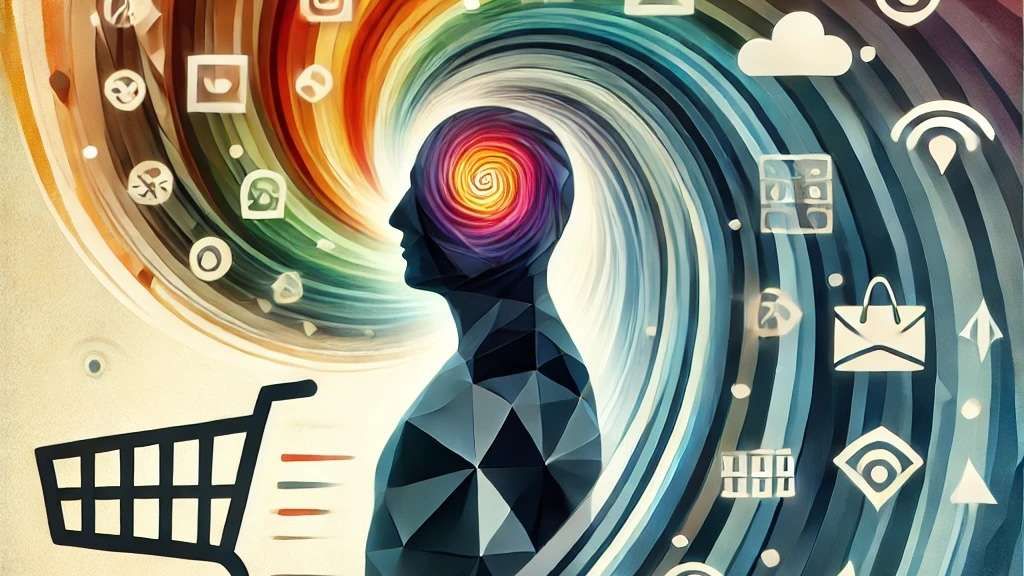
The Attention Economy: How Platforms Profit from Your Distraction
In a world where every notification, ping, and pop-up is trying to elbow its way into your brain, attention has quietly become the most valuable currency you own. Tech companies, social platforms, and advertisers aren’t just competing for your time—they’re building entire business models on your distraction. None of this is accidental. It’s the foundation of the modern attention economy.
This article breaks down how platforms manipulate your behavior, why endless scrolling feels weirdly irresistible, and what it really costs you to stay permanently “online.” Spoiler: it’s more than just a few wasted hours.
The Business of Distraction (a.k.a. Why Everything Feels So Noisy)
Most of the platforms you use every day are “free” for a reason: you’re not the customer—you’re the product.
Your time, clicks, and emotional reactions are turned into data and sold to advertisers. The longer you stay on a platform, the more ads you see, and the more money it makes. That simple equation sits behind almost every design choice you run into online.
Infinite feeds, autoplay videos, push notifications, “you might also like…” recommendations—they aren’t there to make your life easier. They’re there to keep you from closing the app.
Designed to Be Addictive (On Purpose)
The attention economy doesn’t rely on luck. It leans heavily on behavioral psychology.
Platforms borrow tricks from casinos and slot machines:
- Variable rewards: You don’t know when you’ll see something exciting—so you keep scrolling “one more time.”
- Streaks and badges: Usage gets gamified so a habit slowly turns into an obligation.
- Social validation loops: Likes, shares, and comments act as micro-rewards, feeding your need for approval.
Every refresh is basically a digital lever pull. Most of the time, you get something mildly interesting. Occasionally, you get something shocking, hilarious, or deeply validating. That random hit is what trains your brain to keep coming back—even when you’re not genuinely enjoying it.
Emotional Manipulation as a Feature, Not a Bug
Content that triggers strong emotions—anger, outrage, fear, envy—performs incredibly well in the attention economy. Why? Because emotionally charged posts:
- Get more reactions and comments
- Spread faster
- Keep you scrolling to see “what happens next”
Algorithms learn this very quickly and start prioritizing content that hooks you, whether it’s good for you or even remotely accurate.
That creates a loop:
- You react strongly to a piece of content.
- The platform reads that as “success.”
- It feeds you more of the same—often more extreme.
The result is a personalised bubble of emotional manipulation, tuned not for your wellbeing but for your watch time.
The Hidden Costs of Constant Engagement
On the surface, it all looks harmless: a few extra minutes on your phone, a late-night scroll, a quick check of notifications between tasks.
But the costs stack up quietly in the background:
- Fragmented focus: Your attention gets sliced into tiny pieces, making deep work and real rest harder.
- Reduced patience: Anything slow, quiet, or complex starts to feel unbearable.
- Emotional exhaustion: A steady drip of outrage, comparison, and bad news drains your mental energy.
- Distorted reality: You’re shown a filtered version of the world that reinforces your fears, biases, and insecurities.
The attention economy doesn’t care if you’re informed, grounded, or happy. It cares if you’re still scrolling.
When “Convenience” Turns Into Control
It’s easy to justify the dependency:
- “I need social media for work.”
- “I get my news from my feed.”
- “It’s how I stay in touch with people.”
All of that can be true—and still quietly dangerous.
What starts as convenience can slowly become control:
- Your sense of “normal” is shaped by what algorithms decide to show you.
- Your spending is nudged by micro-targeted ads you barely notice.
- Your mood is influenced by curated outrage, curated perfection, and curated drama.
You’re not just using the platforms. They’re using you, too.
How to Steal Your Attention Back
You probably can’t (and don’t need to) disappear from the internet. But you can stop being such an easy target. That starts with awareness and a few deliberate frictions.
Some simple ways to take back control:
- Turn off non-essential notifications
If it doesn’t involve real people or real responsibilities, it doesn’t need to interrupt your day. - Add friction on purpose
Remove social apps from your home screen, log out regularly, or set app limits. A tiny bit of inconvenience can break a mindless habit. - Schedule “online windows”
Decide when you’ll check social media, news, or email instead of responding every time a badge appears. - Audit your feeds
Unfollow accounts that constantly fuel outrage, comparison, or impulsive spending. Follow people who inform, challenge thoughtfully, or calm you down. - Practice being bored again
Don’t fill every micro-moment with a screen. Let your mind wander. Boredom is where real ideas (and uncomfortable truths) tend to show up.
Choosing Where Your Attention Goes
The attention economy is built on a simple bet: that you’ll trade your focus for cheap rewards—likes, alerts, and an endless feed of “just one more” thing.
You don’t have to accept that deal.
When you decide where your attention goes, instead of letting platforms decide for you, you’re not just “using your time better.” You’re quietly opting out of a system that profits from your distraction, your anxiety, and your impulses.
Your attention is limited. Treat it like the currency it really is—and spend it on purpose.