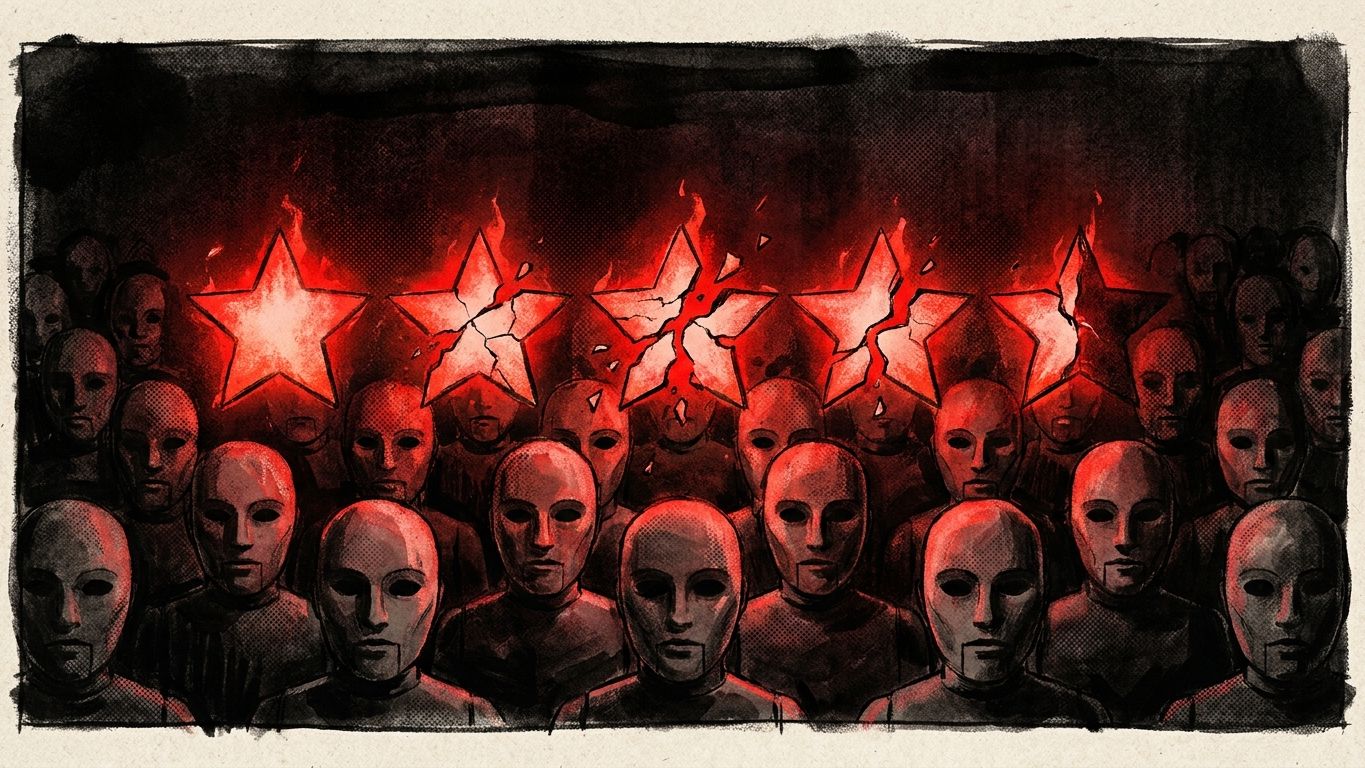
Five hundred reviews, a 4.8-star average, and glowing praise in oddly similar language — "exceeded my expectations," "highly recommend to anyone." None of it is illegal to write, most of it isn't obviously fake at a glance, and a meaningful share of it was never left by a real customer at all. Fake reviews used to be easy to spot: broken English, five stars, posted the same week a product launched. The ones doing damage now are better written than that, and they're built specifically to get past the kind of skim-reading most shoppers actually do.
Why Fake Reviews Are Harder to Spot Than They Used to Be
Three things changed the game at once. Generative AI tools can now produce hundreds of unique, grammatically clean, plausible-sounding reviews in minutes, eliminating the broken-English tell that used to give fakes away instantly. Review-exchange groups on social platforms connect sellers directly with people willing to leave a five-star review in exchange for a free product or a refund after the fact, which produces a review from a real account that genuinely received the item — just not for the reasons it claims. And incentivized reviews, where a discount or free product is offered in exchange for an honest review, skew overwhelmingly positive in practice even when nothing in the arrangement is technically against the rules.
The Red Flags That Still Hold Up
- A sudden burst of reviews concentrated in a short window, especially right after a listing goes live or a brand needs to recover its rating
- Generic enthusiasm without specifics — a real user of a blender usually mentions a smoothie, a specific setting, or a cleanup detail; a fake review tends to praise the product in terms vague enough to apply to almost anything
- A reviewer history that's all five stars across unrelated categories — a profile that loves every product it's ever reviewed, from patio furniture to protein powder, reads less like a person and more like an account built to leave reviews
- Missing "verified purchase" labels clustered on the most glowing reviews specifically, rather than scattered evenly across the rating range
- An oddly polarized spread — a wall of five-star reviews with almost nothing in the three-star range, which is rarely how real opinions about an ordinary product actually distribute
A real product has mediocre reviews. A product with nothing but five stars has a marketing department, not a customer base.
How AI Changed the Fake Review Game
This isn't limited to written text. The same synthetic-media boom that produced AI influencers and deepfake endorsements has made it trivial to generate review content at a scale that overwhelms manual moderation — variations on the same core claim, each phrased differently enough to avoid duplicate-content filters, uploaded from a rotating pool of accounts. The underlying trust signal that reviews were ever supposed to provide, that many independent strangers really did try this thing, breaks down once the volume of "independent strangers" can be generated on demand.
Where the Reviews Actually Come From
A persistent underground economy connects sellers to reviewers directly, frequently coordinated through private groups on mainstream social platforms: a seller posts a product, a reviewer buys it, leaves a five-star review, and gets reimbursed off-platform once the review is live, in a loop explicitly designed to leave no trace of the exchange on the marketplace itself. Other operations run through "free product for honest review" campaigns that are legal on their face but produce a reviewer pool that skews toward people who already like the brand enough to volunteer, which quietly stacks the deck before a single review is written.
What Platforms and Regulators Are Doing
US regulators finalized a rule explicitly banning the sale and purchase of fake reviews and testimonials, including reviews generated or substantially influenced by an undisclosed incentive, with real financial penalties attached. Major marketplaces have separately sued operators of review-brokering networks and purged large batches of accounts tied to them. Enforcement, though, is a constant chase against a supply of fake reviews that can be regenerated faster than any single sweep can remove it — which is why the practical burden of spotting one still mostly falls on the shopper reading it, not the system serving it.
Tools and Tricks That Actually Help
- Sort by most recent, not most helpful — "most helpful" sorting can be gamed by vote manipulation; recent reviews are harder to coordinate at scale
- Click into a reviewer's full history before trusting a single glowing review — most review systems let you see every other review that account has left
- Use a review-analysis browser extension that flags suspicious patterns automatically — several free tools exist specifically for major marketplaces and surface the same statistical red flags at a glance
- Read the three-star reviews first, not the five-star or one-star extremes — that's usually where the most specific, least manipulated detail about a product actually lives
- Cross-check against an independent source — a forum thread, a long-form video review, or a publication with no financial stake tends to surface problems a manufactured review pool is built to bury
Fake reviews rarely operate alone — they're frequently paired with the same manipulative checkout design that pushes a purchase decision before a shopper has time to look past the star rating. A five-star average is the easiest piece of social proof to fabricate precisely because so many people never read past it.
None of this means reviews are useless — most are still real, and still useful. It means the star rating alone has stopped being reliable evidence of anything, and the actual signal has moved to the specific, boring, hard-to-fake details buried a few reviews deep: the ones that mention a flaw, describe a real use case, or simply sound like they were written by someone who had nothing to gain from writing them.