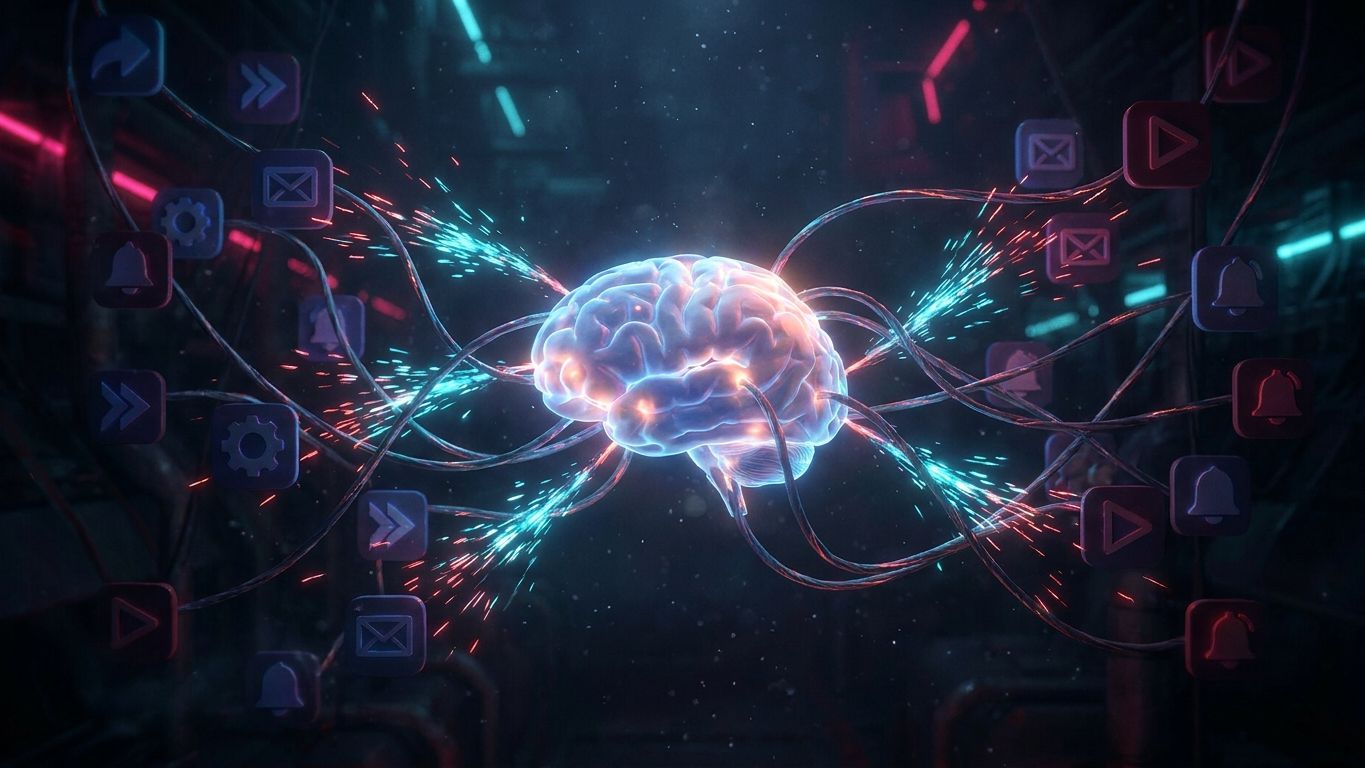
Dopamine Economy: How Apps, Brands, and Platforms Hack Your Brain’s Reward System
The Dopamine Economy: Why Everything Is Fighting for Your Attention
Scroll. Tap. Refresh. Buy. Repeat. If it feels like your life is a constant loop of notifications, micro-rewards, and quick hits of pleasure, that’s not an accident. We now live in what many experts call the dopamine economy—a system where apps, brands, and platforms are engineered to hijack your brain’s reward system and keep you coming back for more.
From social media feeds and mobile games to online shopping, alcohol, and even wellness products, modern industries are optimized around one thing: capturing and monetizing your attention. To understand how this works (and how to protect yourself), you need to understand dopamine—and how it’s being used against you.
In this article, we’ll break down what dopamine really is, how companies design addictive experiences, and the hidden costs of living in a constant cycle of instant gratification.
What Is Dopamine? The Truth Behind the “Pleasure Chemical”
Dopamine is often called the “pleasure chemical”, but that’s only part of the story. In reality, dopamine is more about motivation, anticipation, and reward than pure pleasure. It’s the neurotransmitter that helps your brain learn what to seek out and repeat.
When you experience something rewarding—a tasty meal, a funny video, a like on your post—your brain releases dopamine. That dopamine hit tells your brain: “Remember this. Do it again.”
In a healthy environment, this system helps you pursue meaningful goals: relationships, learning, creativity. But in today’s digital and consumer landscape, it’s been hijacked by products and platforms that exploit this reward circuitry for profit.
What Is the Dopamine Economy?
The dopamine economy is an ecosystem where companies design experiences specifically to trigger your brain’s reward system and keep you engaged, spending, and consuming. Your attention, time, and behavioral data have become valuable commodities—and dopamine is the currency used to buy them.
Key features of the dopamine economy include:
- Endless content streams: Infinite feeds and autoplay keep you scrolling without a natural stopping point.
- Instant gratification: Likes, comments, one-click purchases, and instant deliveries offer fast rewards.
- Data-driven design: Every click, pause, and scroll is tracked to optimize what will keep you hooked.
- Emotional targeting: Content and offers are tuned to your fears, desires, and insecurities.
In other words, the dopamine economy is built to reduce friction between impulse and action—and to normalize constant stimulation.
From Casinos to Smartphones: How Variable Rewards Hook Your Brain
One of the most powerful tools in the dopamine economy is the variable reward system—a mechanism borrowed directly from casinos.
Slot machines don’t pay out every time. You pull the lever, sometimes you win, often you don’t. That unpredictability is exactly what keeps people playing. Your brain gets a stronger dopamine response when rewards are uncertain and intermittent.
Today, that same psychology shows up everywhere:
- Social media feeds: You refresh your feed not knowing what you’ll see next. Occasionally, there’s a post that really hits—and your brain wants that feeling again.
- Notifications: Not every notification is important, but some are. That occasional meaningful ping trains you to check constantly.
- Mobile games: Random loot drops, mystery boxes, and daily rewards use casino-style mechanics to keep you engaged.
- Email and messages: You check “just in case” something exciting or important has arrived.
This variable reward pattern makes experiences feel compulsively checkable. You don’t know when the next dopamine hit is coming, so you keep engaging “just one more time.”
How Apps, Brands, and Platforms Hack Your Reward System
Almost every major digital product you use has been carefully tuned to trigger dopamine. Here’s how different industries play their part in the dopamine economy.
Social Media: Micro-Rewards on Demand
Social media platforms are arguably the most efficient dopamine machines ever built. Their entire business model depends on maximizing your time on the platform so they can serve more ads and collect more data.
- Likes and reactions: Tiny social rewards that signal approval and trigger dopamine spikes.
- Comments and shares: Social validation that reinforces your behavior and keeps you posting.
- Endless scroll: No natural stopping point means no built-in pause for your brain.
- Algorithmic feeds: Content is curated to be emotionally engaging, polarizing, or addictive—whatever keeps you there.
The result is a feedback loop: you post, receive micro-rewards, feel a short dopamine rush, and are encouraged to repeat the cycle. Over time, normal life can feel flat compared to the constant stimulation of the feed.
E-Commerce: One-Click Purchases and the High of Buying
Online shopping platforms are optimized for impulse buying. The dopamine hit doesn’t just come from owning something new—it starts the moment you browse and intensifies when you click “buy now.”
- Flash sales and countdown timers: Scarcity and urgency push you to act quickly, amplifying emotional tension and release.
- “Only 2 left in stock”: Triggers fear of missing out (FOMO), another powerful dopamine driver.
- Personalized recommendations: Based on your behavior, platforms serve items you’re most likely to click on—cutting the distance between desire and purchase.
- One-click checkout: Removes friction so your brain’s impulse can turn into a transaction before logic catches up.
Each purchase reinforces a pattern: feel a need, see an item, get a dopamine hit, click to buy. Over time, shopping becomes less about utility and more about chasing that emotional rush.
Food, Alcohol, and “Artificial Happiness”
It’s not just digital products. Food and alcohol brands have been playing the dopamine game for decades. Many highly processed foods and alcoholic drinks are effectively chemical shortcuts to pleasure.
- Hyper-palatable foods: Engineered combinations of sugar, fat, and salt hit your reward system fast and hard.
- Snacking culture: Constant grazing keeps dopamine on a rolling boil rather than allowing your brain to reset.
- Alcohol marketing: Ads associate drinking with happiness, confidence, and social success, masking the long-term mental and physical costs.
The more you rely on these artificial dopamine boosts, the harder it becomes to enjoy simpler, slower forms of satisfaction.
Wellness, Pharmaceuticals, and the Promise of Quick Fixes
The wellness and pharmaceutical industries also participate in the dopamine economy by selling solutions in a bottle: supplements, pills, and programs that promise rapid transformation or relief.
- “Feel better fast” messaging: Appeals to your desire for instant results rather than long-term change.
- Before-and-after imagery: Visual dopamine triggers that sell the fantasy of quick transformation.
- Lifestyle medication: Normalizing daily pills for issues that often have behavioral or systemic roots.
Instead of supporting slow, sustainable improvements, these products often feed the same cycle of short-term relief and long-term dependency.
The Hidden Costs of Living in a Constant Dopamine Loop
At first glance, the dopamine economy looks like harmless convenience and entertainment. But there are real psychological, emotional, and financial costs to living in a state of constant stimulation.
Lower Baseline Motivation and Attention
When your brain is used to quick hits of dopamine, ordinary life can start to feel dull. Tasks that require sustained effort—reading, learning, deep work, building relationships—struggle to compete with the instant rewards of your phone, your feeds, or your shopping cart.
Over time, this can lead to:
- Reduced attention span: Difficulty focusing on tasks without checking your phone.
- Chronic procrastination: Choosing quick rewards over long-term goals.
- Surface-level engagement: Skimming instead of diving deep.
Dopamine Tolerance and the Need for More Stimulation
Like any reward system, your brain can develop a kind of tolerance. The more you flood it with high-intensity rewards, the less responsive it becomes. What once felt exciting starts to feel normal, pushing you to seek even more stimulation.
This might look like:
- Needing to scroll longer for the same feeling of satisfaction.
- Buying more often, not because you need anything, but because you’re chasing the thrill.
- Consuming more content, more quickly, yet feeling less fulfilled.
Mental Health Strain: Anxiety, FOMO, and Emotional Exhaustion
The dopamine economy doesn’t just exhaust your attention. It wears down your emotional resilience.
- FOMO (fear of missing out) from constant exposure to curated lives, limited offers, and “last chance” deals.
- Anxiety triggered by notifications, comparison, and the pressure to stay constantly connected.
- Emotional crashes after the temporary highs of scrolling, shopping, or bingeing.
These patterns can erode your sense of autonomy and self-worth, making you feel controlled by your own habits and devices.
How to Reclaim Your Brain in the Dopamine Economy
The goal isn’t to eliminate dopamine or abandon technology. It’s to stop playing on hard mode in a system designed to keep you impulsive, distracted, and dependent. Here are practical ways to take back control of your reward system.
1. Add Friction Between Impulse and Action
The dopamine economy thrives on frictionless experiences. You can push back by deliberately adding small obstacles that give your rational brain time to catch up.
- Remove one-click ordering: Require yourself to go through the full checkout process or use a shopping cart “cooling-off” period.
- Delete saved payment methods: Make purchases take long enough that you can reconsider.
- Turn off autoplay: On video platforms, disable features that automatically start the next episode or clip.
These small frictions don’t block you from acting—they simply slow you down enough to choose deliberately.
2. Take Control of Notifications and Digital Triggers
Notifications are pure dopamine bait. Every ping is a promise of reward. By default, most apps are set to interrupt you constantly. You don’t have to accept that.
- Disable non-essential notifications: Keep only what is truly time-sensitive (calls, maybe messages).
- Batch your checking: Set specific times to check email and social media instead of reacting instantly.
- Move addictive apps off your home screen: Make them harder to access so opening them becomes a conscious choice.
Every notification you silence is a piece of your attention you reclaim.
3. Train Your Brain to Tolerate Boredom and Slowness
In a dopamine-saturated environment, boredom feels unbearable, but it’s actually where creativity, reflection, and deep thinking live. Instead of filling every quiet moment with a screen, use boredom as training.
- Micro-moments of boredom: Stand in line without taking out your phone. Sit with your thoughts during a commute.
- Single-tasking: Do one thing at a time—cook, walk, read—without layering on extra stimulation.
- Slow hobbies: Engage in activities that reward patience: reading, writing, drawing, gardening, long walks.
Over time, your brain recalibrates. Simple experiences start to feel rewarding again as your baseline resets.
4. Design Your Own Reward System Around Long-Term Goals
If you don’t consciously design your own reward system, platforms, brands, and algorithms will do it for you. Instead of relying on external hits, build intentional dopamine loops tied to what actually matters to you.
- Break big goals into small wins: Each completed step becomes a genuine source of reward.
- Track progress visibly: Use habit trackers, journals, or checklists to give your brain visual feedback.
- Celebrate effort, not just outcomes: Reward yourself for showing up and doing the work, not only for “big” achievements.
This doesn’t mean you never scroll or shop. It means your deepest rewards come from your priorities, not someone else’s profit model.
5. Be Ruthless About What You Let Influence You
The dopamine economy thrives on passive consumption. Opting out starts with curating what has access to your mind in the first place.
- Unfollow and unsubscribe from accounts, creators, and brands that trigger comparison, FOMO, or impulse spending.
- Seek out long-form, nuanced content rather than only quick, high-stimulation clips.
- Question emotional triggers: If something makes you feel urgent, inadequate, or hyped, pause and ask who benefits from that feeling.
Every piece of content you consume is either training your brain toward autonomy or deeper dependency.
Conclusion: Reclaiming Your Reward System in a Hijacked World
The dopamine economy is not an accident. It’s the logical outcome of a system where attention is money, data is leverage, and human behavior is a resource to be mined. Apps, brands, and platforms have learned to hack your brain’s reward system—but that doesn’t mean you’re powerless.
By understanding how dopamine works, recognizing the mechanics of variable rewards, and deliberately redesigning your digital and physical environment, you can step out of the constant loop of instant gratification. You can choose depth over distraction, intention over impulse, and long-term fulfillment over short-term hits.
You can’t opt out of the dopamine economy entirely—but you can decide who gets to profit from your brain. The more consciously you protect your attention and your reward system, the more autonomy you reclaim in a world built to take it away.